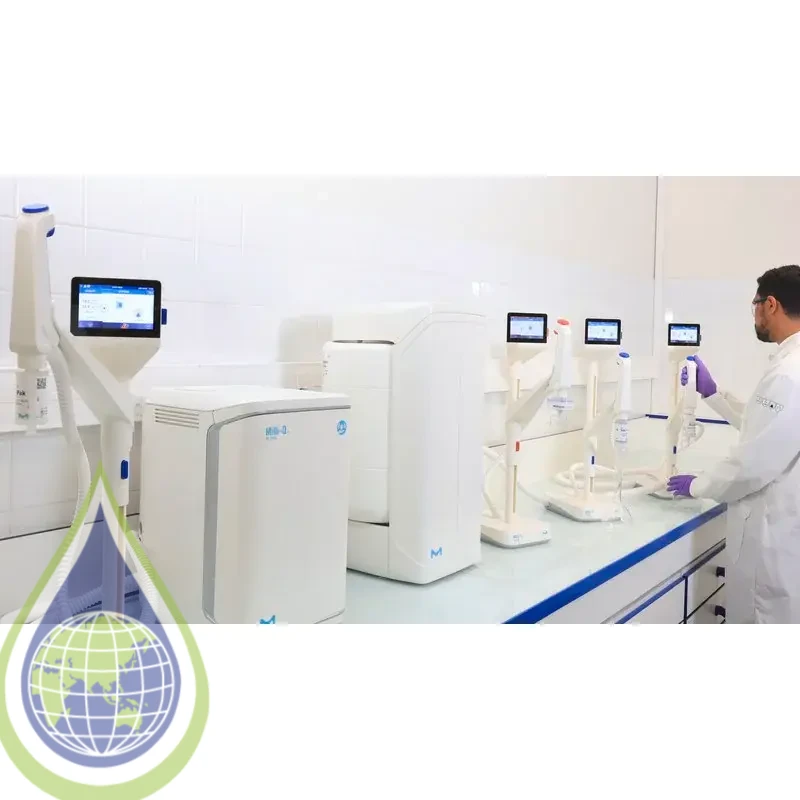
Ultrapure Laboratory Water – The foundation of accurate, contamination-free scientific experiments.
Water might look clean to the naked eye, but when it comes to science, not all water is equal. In laboratories, ultrapure water is essential — it helps ensure that experiments, analyses, and manufacturing processes deliver accurate and reliable results. Even the tiniest impurity in water can ruin a test, damage equipment, or skew data.
In this guide, we’ll explain what ultrapure laboratory water is, how it’s made, what it’s used for, and where to buy ultrapure laboratory water in Australia from trusted suppliers like ASIS Scientific.
Ultrapure laboratory water is the cleanest, highest-quality water available. It’s often called Type 1 water, and it’s purified to remove nearly all ions, organic compounds, microorganisms, and particles.
It’s measured by resistivity (18.2 MΩ·cm) or conductivity (0.055 µS/cm) — this means the water is so pure it barely conducts electricity!
Ultrapure water is used in research, healthcare, and technology industries where even tiny impurities could cause big problems.
Different Types of Laboratory Water
Not all lab water is the same. Here’s a quick breakdown:
Type 1 (Ultrapure Water): The highest purity. Used for critical lab applications like HPLC, PCR, molecular biology, and mass spectrometry.
Type 2 (Pure Water): Slightly lower purity but good for general lab work, preparing reagents, and feeding Type 1 systems.
Type 3 (RO Water): Reverse osmosis water. Used for washing glassware or as feed water for Type 1 and 2 systems.
If you’re doing sensitive experiments or analytical testing, Type 1 ultrapure laboratory water is the best choice.
No products were found for this query.
Why Purity Matters in the Lab
Even if your tap water looks crystal clear, it’s full of ions, organics, bacteria, and gases that can interfere with experiments.
Ions like calcium and magnesium can affect enzyme reactions and PCR results.
Organics can cause ghost peaks or unstable baselines in HPLC or LC-MS.
Bacteria can release toxins that disrupt protein or DNA work.
Particles can clog filters and damage instruments.
Dissolved gases can change solution pH or create background noise in spectroscopy.
That’s why scientists use ultrapure water — it removes all these issues before they start.
How Ultrapure Laboratory Water Is Made
Producing ultrapure water involves multiple filtration and purification steps. Each step targets a specific contaminant:
Pre-filtration: Removes large particles and sediments.
Activated Carbon Filtration: Adsorbs chlorine and organic compounds.
Reverse Osmosis (RO): Filters out salts, microbes, and dissolved solids.
Ion Exchange or Electrodeionization (EDI): Removes ions like calcium, magnesium, and sodium.
UV Photo-oxidation & Polishing: Destroys trace organics and microbes for final purity.
Modern water purification systems combine all these steps to produce consistent, high-quality ultrapure water for laboratory use.
Ultrapure Laboratory Water – The foundation of accurate, contamination-free scientific experiments.
Storing Ultrapure Water Correctly
Ultrapure water should ideally be used right after it’s produced — it’s so pure that it easily absorbs gases and contaminants from the air.
If storage is necessary:
Use clean, low-leach containers (glass or high-quality plastic).
Rinse containers with ultrapure water before filling.
Keep them capped and store for short periods only.
This ensures the water stays as pure as possible until it’s used.
Choosing the Right Ultrapure Water System
When setting up a lab or upgrading your water system, think about:
Feed water quality: Tap or pretreated?
Daily water needs: How much do you use?
Monitoring tools: Check systems with resistivity and TOC meters.
Space and setup: Under-bench or wall-mounted options.
Sustainability: Choose systems that save water, energy, and chemicals.
Modern systems like the Milli-Q® (MilliporeSigma) and Arium® (Sartorius) series make it easier to get reliable ultrapure water directly from tap water.
Where to Buy Ultrapure Laboratory Water
If you’re wondering where to buy ultrapure laboratory water in Australia, the answer is simple — ASIS Scientific is one of the leading suppliers.
They provide:
High-quality ultrapure laboratory water systems
Purified water for scientific, industrial, and educational applications
Expert advice to help you choose the right water system for your lab
ASIS Scientific partners with trusted brands and provides installation, maintenance, and technical support for all laboratory water systems.
👉 Visit ASIS Scientific to learn more or order ultrapure laboratory water for your lab.
FAQs About Ultrapure Laboratory Water
1. What is ultrapure laboratory water used for?
Ultrapure water is used in highly sensitive laboratory applications such as PCR, DNA sequencing, chromatography (HPLC, UHPLC), and mass spectrometry, where impurities could distort results.
2. How is ultrapure water different from distilled water?
Distilled water is purified through boiling and condensation, but it may still contain ions and organics. Ultrapure water goes through advanced filtration processes to remove nearly all contaminants, making it much purer.
3. Can I store ultrapure water for later use?
Yes, but it should be stored in clean, capped containers for short periods. Long-term storage can cause contamination from air, dust, or container materials.
4. Where can I buy ultrapure laboratory water in Australia?
You can buy ultrapure laboratory water from ASIS Scientific, a leading supplier of scientific equipment and water purification systems in Australia.
5. Does ASIS Scientific supply ultrapure water systems?
Yes. ASIS Scientific supplies and installs ultrapure water purification systems from trusted global brands, offering both equipment and consumables for laboratory water needs.
6. What purity level is considered ultrapure?
Ultrapure water has a resistivity of 18.2 MΩ·cm and a conductivity of 0.055 µS/cm, meaning it contains almost no ions or contaminants.
Need help finding the right water purifier? speak to a specialist below!